
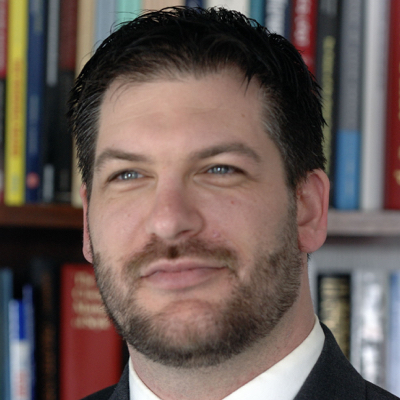
David is an economist at CEPR. He has a PhD in computer science from North Carolina State University and an M.A. in economics from George Washington University.
David has extensive experience monitoring international election data and testing theories of fraud and institutional interference, including balloting in Bolivia (“Observing the Observers: The OAS In The 2019 Bolivian Elections” with Jake Johnston, March 2020), Ecuador, Haiti (“The Organization of American States in Haiti: Election Monitoring or Political Intervention?” October 2011), Mexico (“An Analysis of Mexico’s Recounted Ballots” with Mark Weisbrot, Luis Sandoval, and Carla Paredes-Drouet, August 2006), Pakistan, Peru, and Venezuela (“Black Swans, Conspiracy Theories, and the Quixotic Search for Fraud: A Look at Hausmann and Rigobon’s Analysis of Venezuela’s Referendum Vote” with Mark Weisbrot and Todd Tucker, September 2004).
David has written numerous policy papers and analyses on a variety of subjects including “Have US-Funded CARSI Programs Reduced Crime and Violence in Central America?” with Alex Main and Laura Jung; “Latin American Growth in the 21st Century: The ‘Commodities Boom’ That Wasn’t” with Mark Weisbrot, May 2014; “Pension Liabilities: Fear Tactics and Serious Policy” with Dean Baker, January 2012; “The Ryan Medicare Plan: Winners and Losers” with Dean Baker, April 2011; “Social Security and the Age of Retirement,” June 2010; “Poor Numbers: The Impact of Trade Liberalization on World Poverty,” with Mark Weisbrot and Dean Baker, November 2004; and “The Forty-Four Trillion Dollar Deficit Scare,” with Dean Baker, September 2003.
He is the architect of a number of online calculators, including CEPR’s Accurate Benefits Calculator that compares current-law Social Security benefits to the Bush Plan based on “Progressive Indexing” and the Housing Cost Calculator that compares the cost of owning a home relative to renting for a potential new homeowner. The Housing Cost Calculator gave homebuyers a sense of how the bubble in the housing market might have affected them.
Prior to joining CEPR, he worked as a research associate (postdoc) at the Department of Computer Science, North Carolina State University.
All from David Rosnick
Gridlock, US Interference, Technical Failures and an Incomplete Recount: An Assessment of Honduras’s 2025 Elections
This report on Honduras’s 2025 general elections, based on the observations of CEPR’s electoral mission to Tegucigalpa, finds no evidence in the available data to support claims of fraud. However, the elections were marked by a broader crisis of confidence, driven by partisan institutional gridlock, US interference, logistical issues, technical deficiencies, disputes over the results, and an incomplete recount process.
Did Sanctions Relief Drive Venezuelan Migration to the US? A Reappraisal of the Bahar and Hausmann Results.
Does sanctions relief actually spur migration? Our analysis suggests a recent paper draws conclusions resulting from a coding error.
Nickels Before Dimes: Concluding Remarks
In this blog post series, we examined assumptions and biases in Escobari and Gary A. Hoover’s 2020 report,

Escobari and Hoover Fake a Triple-Difference and Make Things Worse
Escobari and Hoover Fake a Triple-Difference and Make Things Worse

The Grand Switcheroo: Escobari and Hoover Reinterpret Their Results to Misidentify Fraud
Escobari and Hoover’s assumptions are far too restrictive, disallowing all kinds of benign explanations of Bolivia’s 2019 election results.
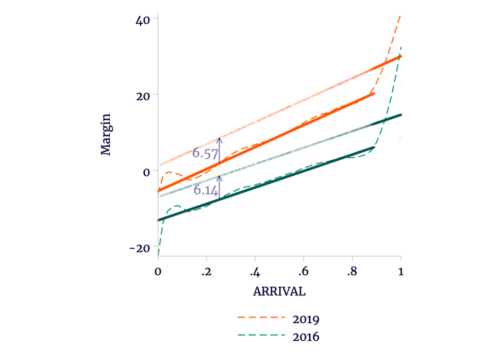
Red Herrings: Escobari and Hoover’s Geographic Controls and Common Trends Add Nothing
Escobari and Hoover mistakenly find fraud where none exists.

Escobari and Hoover Make an Improper Comparison to 2016, Invalidating Their “Difference-in-Difference” Estimates
This is the tenth in a series of blog posts addressing a report by Diego Escobari and Gary Hoover covering the 2019 presidential election in Bolivia.

The 2019 Election Is Not Directly Comparable to the 2016 Referendum
This is the ninth in a series of blog posts addressing a report by Diego Escobari and Gary Hoover covering the 2019 presidential election in Bolivia.
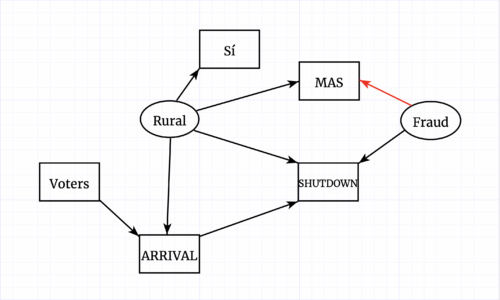
Escobari and Hoover’s “Difference Estimates” Are Driven by Geography — Not by “Fraud”
This is the eighth in a series of blog posts addressing a report by Diego Escobari and Gary Hoover covering the 2019 presidential election in Bolivia.
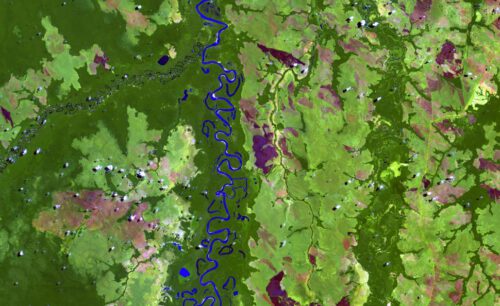
Escobari and Hoover’s “Difference Estimates” Must Not Be Taken at Face Value
This is the seventh in a series of blog posts addressing a report by Diego Escobari and Gary Hoover covering the 2019 presidential election in Bolivia.
